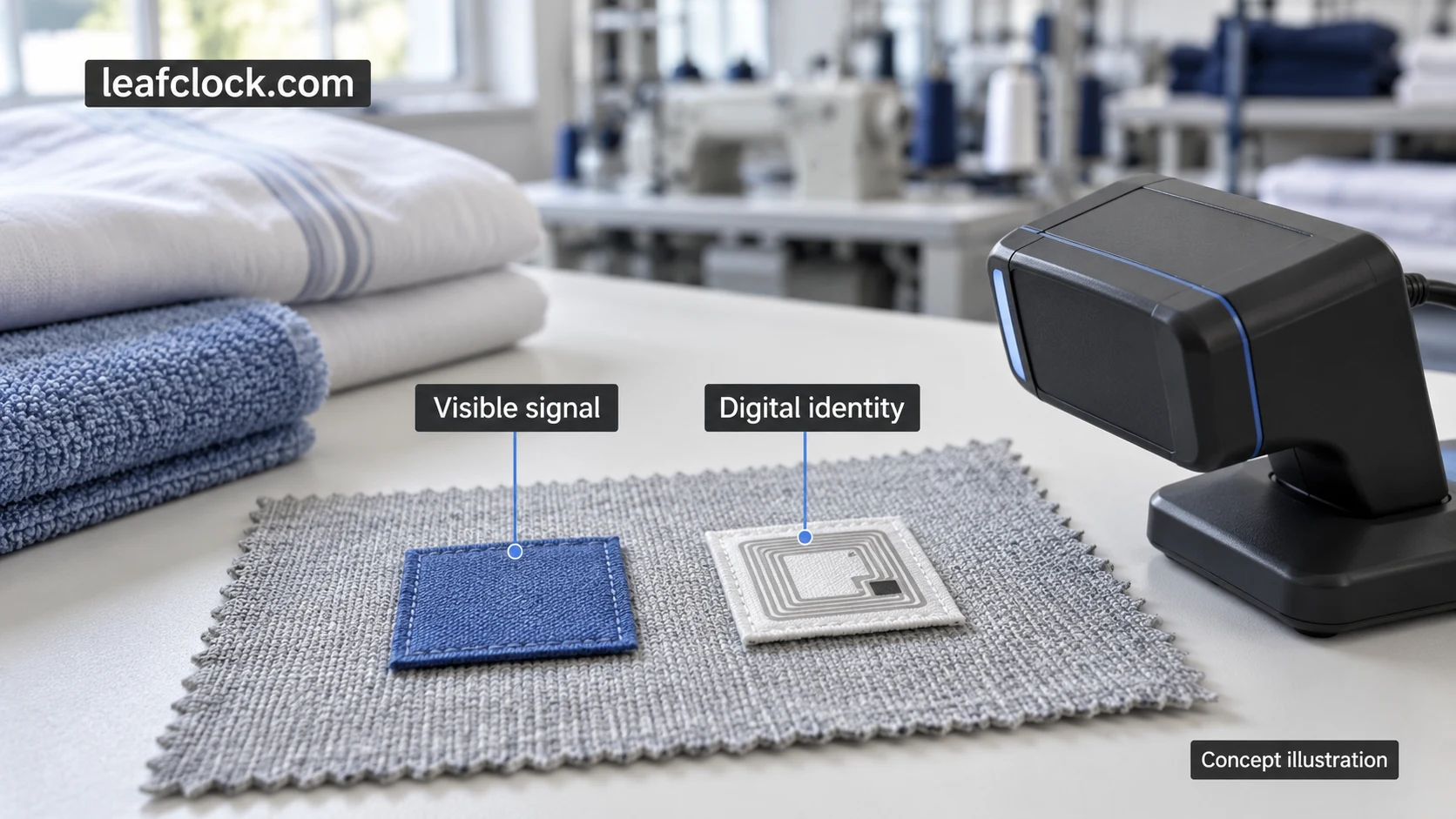
Use a functional label when the wearer needs a visible prompt at a planned point in use and has a useful action to take. If they need washing instructions, improve the care label. If an operator needs a history for each garment, give the item an identifier and record each event. Those requirements lead to different choices. For a Leafclock configuration, that point can be a target replacement stage or a check stage, based on the product brief and care routine.
Match the tool to the task
| The question at the garment | The useful tool | What the brand must provide |
|---|---|---|
| How do I wash and dry this? | Permanent care instructions | The approved procedure for the complete garment |
| When should I check a feature or consider replacement? | A visible lifecycle cue | A configured prompt and an instruction naming the feature to check |
| Which revision or replacement part is this? | A product code linked to a record | A lookup that resolves to the correct version |
| How many times has this individual item been processed? | An item identifier with a recorded event log | A reliable way to capture and verify every qualifying event |
In the United States, the FTC Care Labeling Rule requires regular care instructions for covered textile apparel. Keep these instructions readable and available throughout use. Adding another feature gives the brand a second message to explain. FTC Care Labeling Rule.
Test the physical label where people will use it
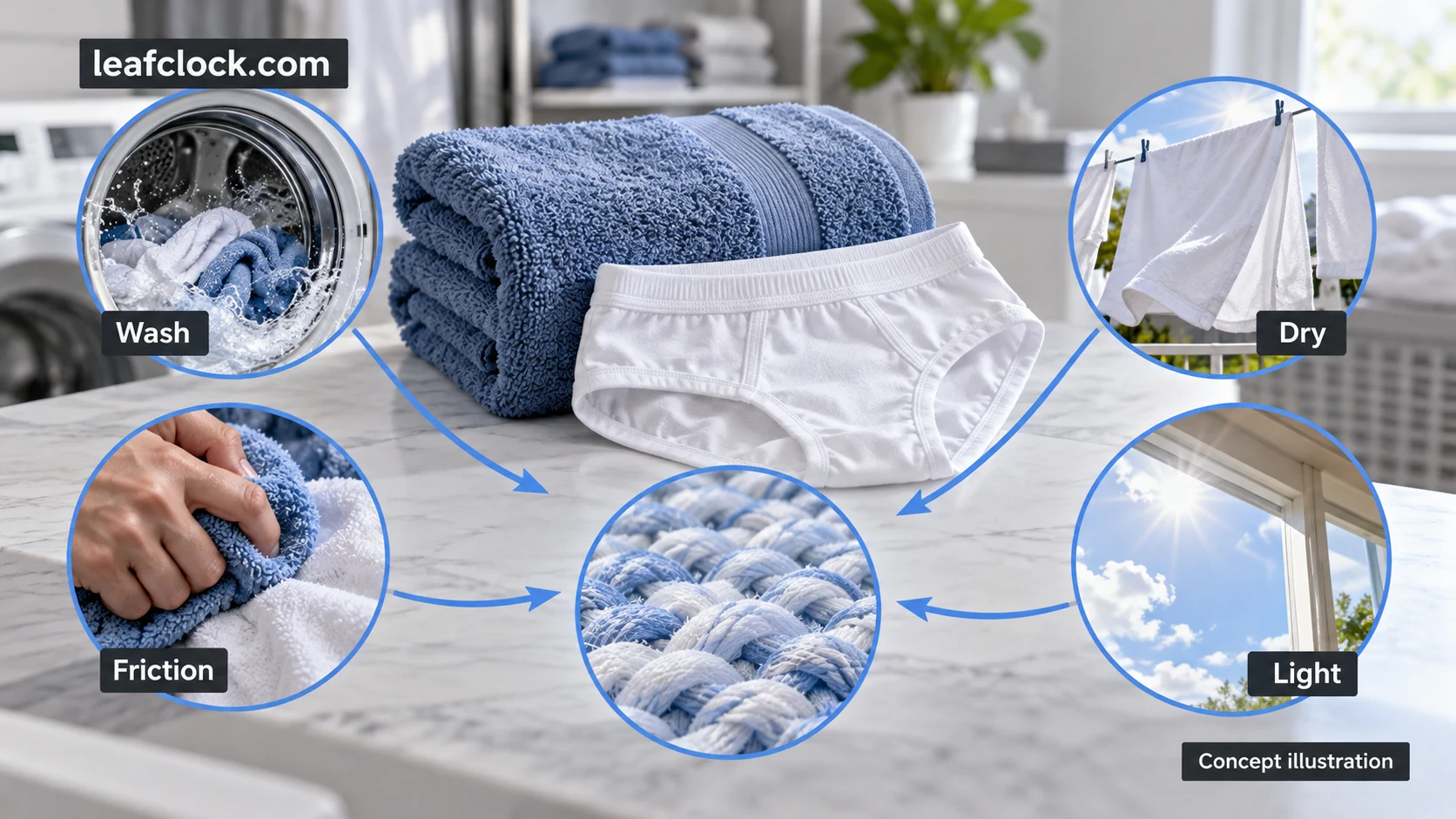
A Leafclock label can be sewn in or applied as a heat transfer. The wearer compares an area that changes gradually with a reference area. We can configure the cue for target wash-and-sun-dry or wash-and-tumble-dry cycles, or an intended replacement interval, using the product’s care and use conditions. The configuration and action should be designed together. A prompt to inspect an elastic band, for example, is only useful if the customer can recognise the change that matters to fit.
Make a sample with the proposed attachment and placement. Check how the garment feels when worn and whether the user can find and read the cue in ordinary light. Check it again after the intended care. The label and its explanation should remain readable without obscuring the original care information. If the cue is visible but the action is unclear, revise the instruction first.
Set a useful comparison before introducing it
Give one group the current care information and another group the revised garment with the extra prompt. Ask them to explain the next action when shown a sample at its planned indication point. Record whether each person checks the right component and what they would do if it still works. Compare the two groups before deciding whether the added cue justifies the change in construction.
If the sample makes sense for your product, use the sample request to share the garment, approved care routine, proposed placement and intended wearer decision. Bring your existing care artwork so both messages can be checked together.
Prototype the smallest feature that changes the decision
Make a sample of the feature at the point where it will be handled. Compare it with the current item through the intended care routine, inspecting attachment, feel and whether the user can complete the task. Keep item-level records where the program needs traceability.
See Leafclock textile label options for the product context.
Frequently asked questions
Does a visible cue need an app?
No. The wearer reads the changing area against the reference directly on the garment.
Which tool should a brand use when it needs exact item histories?
Use a stable item identifier and a process that records each qualifying event. A visual cue can support the wearer’s decision alongside that record.