
Choose the garment before the graphic
Underwear, bras and performance intimates need separate product briefs. A shared collection name is less useful than the actual fabric, construction, care instructions and label location. For period or leakproof underwear, include the product’s specific washing and drying instructions in the discussion.
| Product direction | Sample review focus |
|---|---|
| Everyday underwear | Position, feel, stretch and easy access to the cue |
| Bras and fitted garments | Label movement and visibility in the intended location |
| Functional intimates | Care routine and the distinction between replacement guidance and functional performance |
We recommend starting with the item your team can supply and evaluate most clearly, then extending the configuration to other items only after reviewing their differences.
Make the cue comfortable and readable
Review heat-transfer and sewn-in options on an actual garment. Compare how the label sits, feels and moves during handling, and whether users can find the changing and reference areas without confusing them with other care information.
The functional area changes gradually. The customer compares it with the reference area and follows your product’s replacement guidance. See the reading method.
Review the waistband and side seam
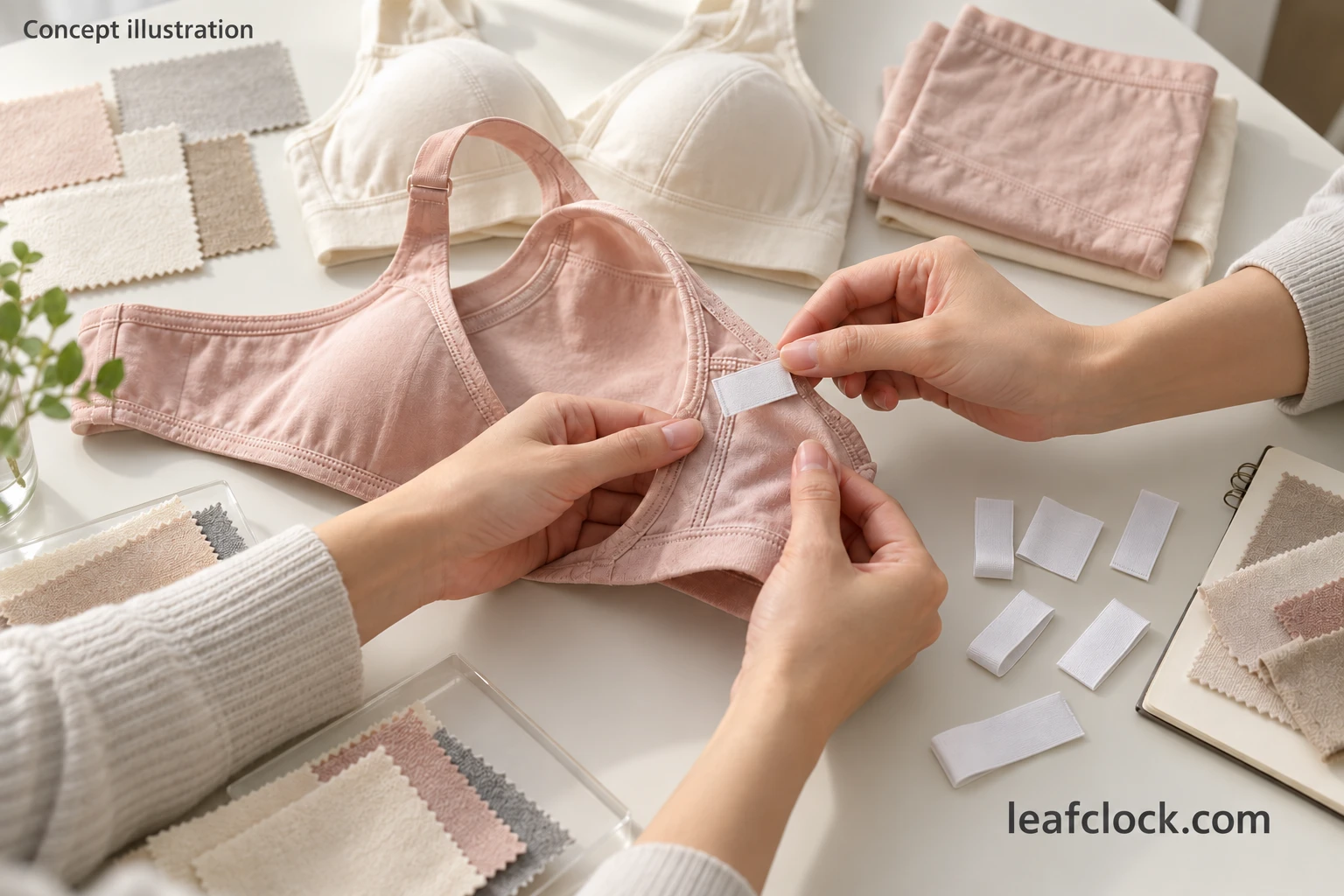
Trial a heat-transfer care label inside the waistband or on a flat panel near the side seam. Use the waistband when it gives the wearer an easy place to find the cue. Try the side panel if the waistband folds, stretches more or presses against the skin at the proposed label position. Review both placements on the finished garment.
Match the target to the care routine
Share the target cycles or replacement interval together with washing, drying and typical use. Wash-Sun and Wash-Dry are configured for different care conditions and use different functional/reference colors, so the consumer explanation should use the actual selected sample.
A label’s cue supports your replacement message. Garment fit, wear and the performance requirements of functional underwear remain part of the product’s own evaluation. Explore customization.
Explain the benefit before purchase and during use
Show customers where the indicator sits and how to read it. Use the same picture and instruction on the product listing, packaging and care material. This gives the garment a demonstrable feature and creates a concrete subject for after-purchase care communication.
Example packaging copy: “Find the two areas inside the waistband. As you wash and dry the garment according to the care instructions, compare the changing area with the reference. When the areas reach the stage shown here, consider replacing the garment.” Use the sample’s actual colors and position in the illustration.
See how Aimer and Wacoal presented and evaluated a cue in intimate apparel programs.
What to bring for an OEM or factory sample review
If you already manufacture the garment, send a brief that a factory and brand team can share. Leafclock is configured around your product’s care routine and intended replacement point.
| Bring this | Why it matters in sampling |
|---|---|
| Exact style (not only a collection name) | Fabric, trim and placement differ by SKU |
| Care label or proposed wash / dry route | Wash-Sun and Wash-Dry use different conditions and cue colors |
| Target wash-sun cycles, wash-dry cycles, or intended replacement interval | The sample discussion starts from your goal, then matches use and exposure |
| Preferred carrier (heat-transfer or sewn-in) and trial location | Stretch, hand-feel and readability are checked on the finished garment |
| Stretch or attachment concerns for that style | Intimate garments need placement and handling checks before scale |
Start with one evaluable SKU, record observations against that configuration, then extend after fabric, care and placement differences are reviewed. Explore customization and request samples with those inputs.
Plan a useful sample review
Bring product and marketing colleagues into the same review. Record the fabric and care routine, compare placement and feel, and ask an unfamiliar reader to identify the two areas and explain the next action. Review evaluation materials.
Request samples for the style you want to evaluate.
Frequently asked questions
Where should the cue sit on underwear?
Trial the inside waistband and a position near the side seam. Compare access, feel and legibility when the item is laid flat and stretched.
Can we customize the intended replacement interval?
Yes. Share the intended interval with use frequency and care conditions so the sample represents the garment and the care routine.
Can one sample represent the whole collection?
Review any change in fabric, construction, care or placement with the product team before extending a configuration.