Read a passive textile indicator by comparing 2 areas on the garment. The functional area changes gradually under the selected care and use conditions. The reference shows what to compare it with. The brand decides what the comparison should prompt, such as checking the garment for signs that it is time to replace it.
The comparison gives the color its meaning
A single colored spot can be hard to interpret without knowing how it looked when new. Keep the functional and reference areas visible together. Leafclock’s Wash-Sun model progresses from blue toward pink. Wash-Dry progresses from yellow toward purple or light purple. Show the model used on the actual garment in the instruction and check that a seam or fold leaves both areas visible.
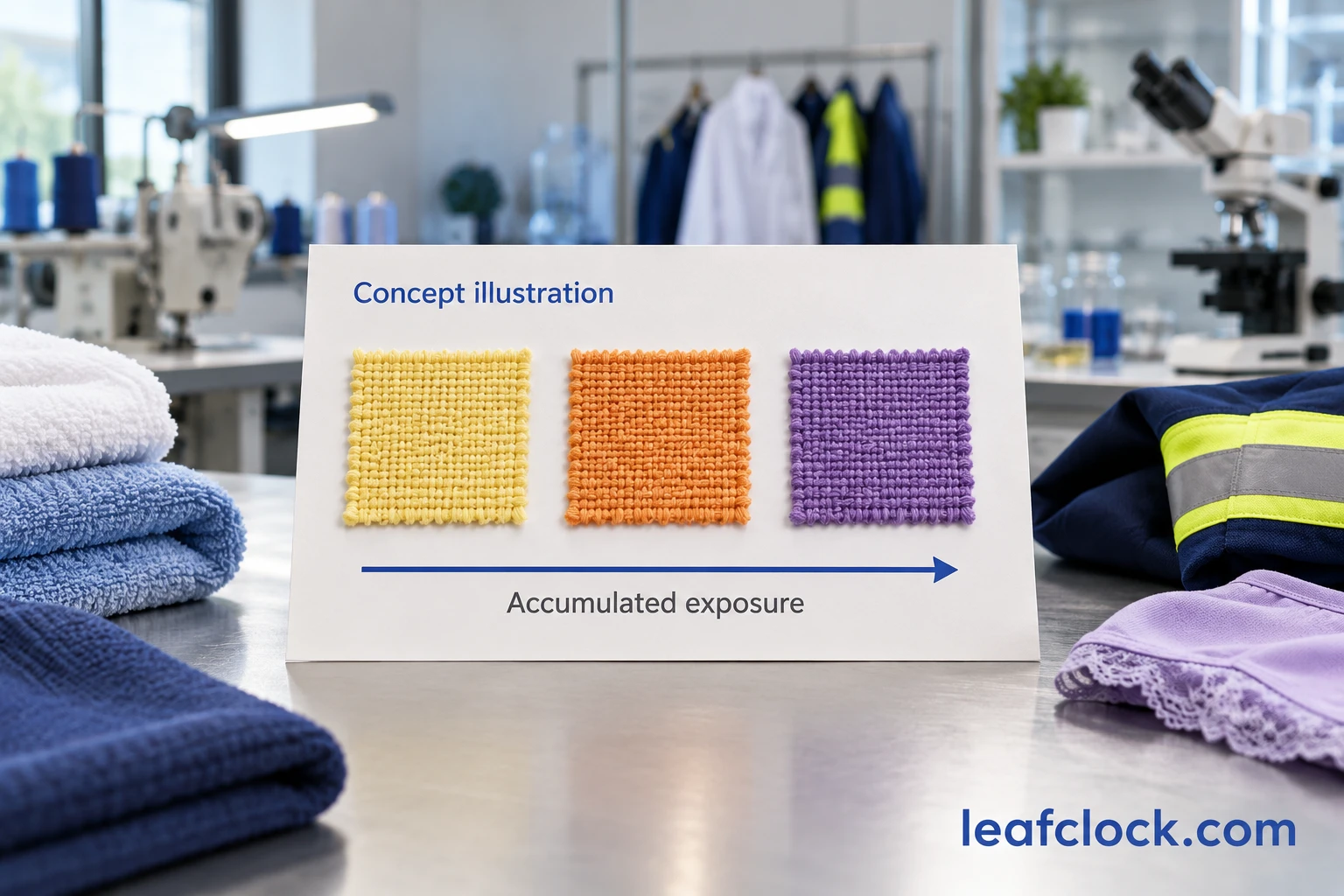
A label designed around a repeated care routine differs from an immediate warning whose appearance tells the wearer what is happening right now. When comparing suppliers, ask what conditions are intended to drive the change and what the wearer should infer from each stage. Evaluate the visible response for the specified product and care route before choosing the wording.
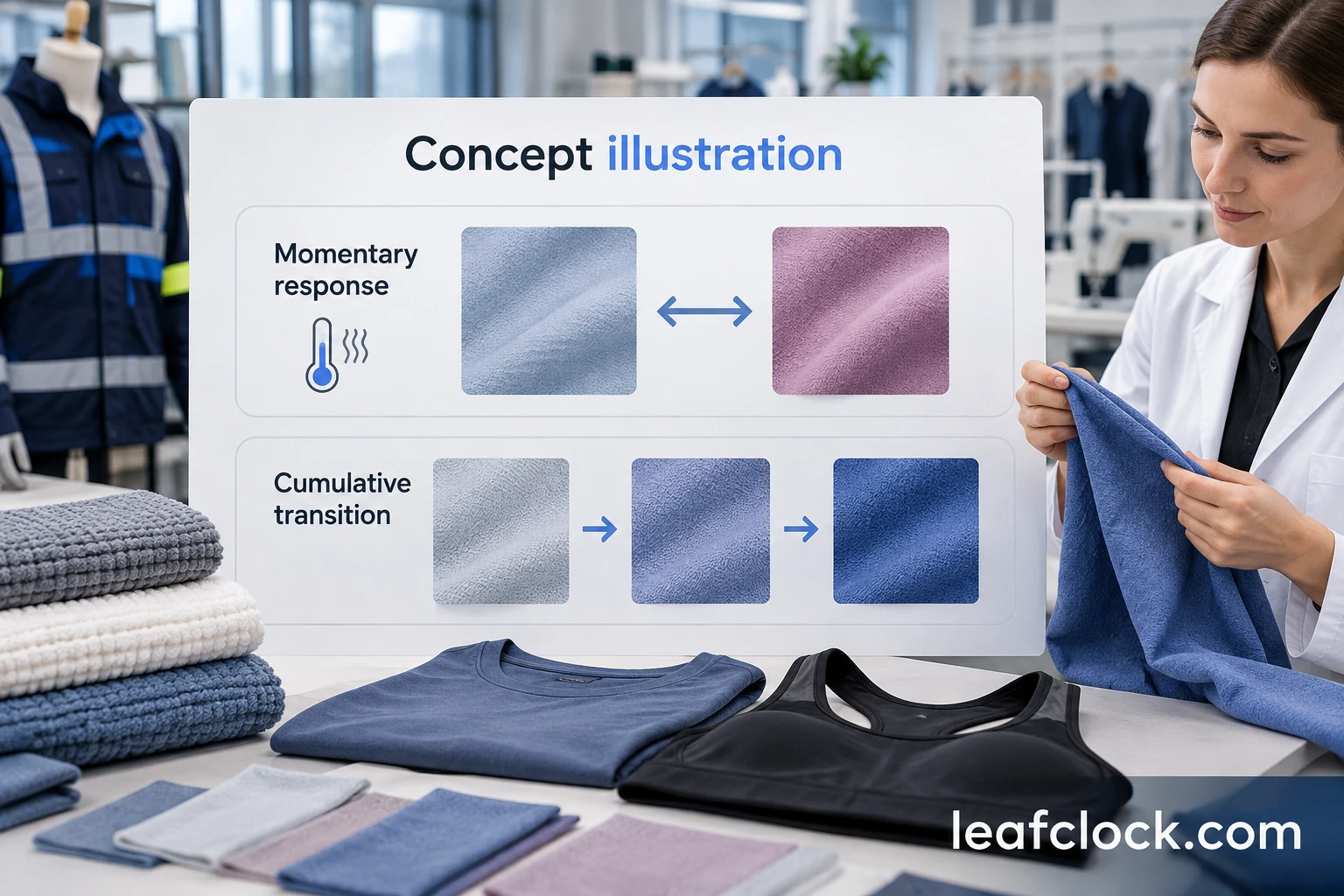
Configure and observe the selected care route
Leafclock can configure the cue for target wash-and-sun-dry or wash-and-tumble-dry cycles or an intended replacement interval. Supply the expected frequency, actual care sequence and relevant environment. If you use an indoor dryer and another product is sun dried, treat them as separate starting points for the configuration discussion.
| Stage | What to look for on the installed sample |
|---|---|
| New | Both areas are visible and the instruction shows the right starting appearance. |
| Intermediate | The functional area can still be distinguished and the reference remains easy to find. |
| Intended cue | The comparison is readable and the wearer can state the intended action. |
For domestic wash and dry testing, choose the procedure that reflects the garment’s approved care. Record any separately defined light exposure and how you observed it. ISO 6330 defines domestic care procedures for textile testing. ISO 105-B02 addresses a different question, textile colorfastness to artificial light. ISO 6330 and ISO 105-B02

Use an unexpected result to find the cause
Compare the installed sample with a retained new sample. If the reference is obscured, first inspect the placement and attachment. If both areas are difficult to see on a dark fabric, check the artwork and viewing conditions before changing the target. If garments following different routines reach noticeably different cue states, record each routine and review whether a single configuration fits them.
Keep the wearer’s action and the quality test distinct. For example, the cue can prompt a wearer to inspect a waistband. To measure whether the waistband still meets a recovery requirement, test the elastic or garment directly. Use the Leafclock reading guide for the visual comparison and the care route test example for garment observations.
Separate an intended cue from changes in the textile
Inspect the functional area against its reference while recording staining or fading of the surrounding textile separately. Choose an observation or test method for each question. Review attachment, apparent color change and textile condition as separate results.
Frequently asked questions
Does the wearer need an app to read the changing color?
No. The wearer compares the functional area with the reference and follows the brand’s product-specific instruction.
Can the changing area show the exact number of washes?
No. It provides a configured visual cue based on the intended care and use conditions.