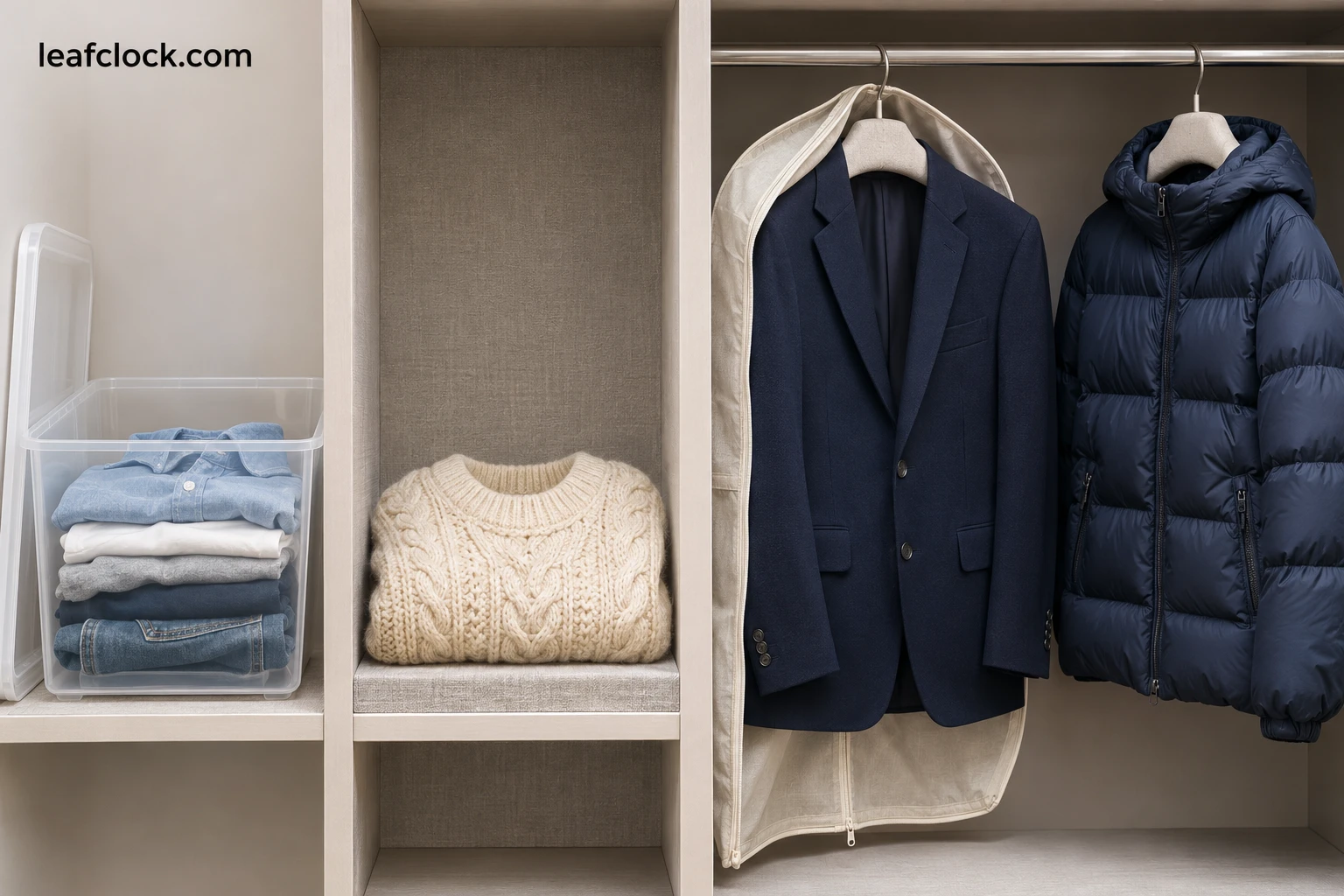
To store clothes long term, make 5 decisions before packing: clean each garment as its label permits, dry it fully, choose a cool and dry location, support its shape, and select a suitable container. Keep stored clothing out of light and inspect it periodically; elapsed time alone cannot tell you whether it is ready to wear.
How to store clothes long term: the packing checklist
Pack clothing only after both the garments and their storage space are ready. A useful order is to choose what you expect to wear again, clean it, let it dry completely, then sort it by the support it needs.
- Read the care label and use the permitted washing or professional cleaning route. Check collars, cuffs and pockets for soil before packing.
- Confirm that thick seams, waistbands and linings are dry, not just the exposed surface. Return anything still damp to its appropriate drying setup.
- Check for holes, loose fastenings and signs of insects. Set aside items needing treatment or repair instead of burying them in a clean stack.
- Clean and dry the shelf, box or bag. Give each garment enough room that closing the lid does not crush it.
- Label the container with its contents and packing date, and put a reminder in your calendar to inspect it.
Woolmark’s storage advice supports cleaning before storage and checking garments while they are put away. Follow the garment’s own instructions for the cleaning method. A modern washable sweater and a fragile inherited dress need different care.
For linen shirts, dresses and trousers, use the linen clothes washing and drying guide before seasonal packing, then make sure the garment is fully dry.
Choose the room before choosing the box
Use a stable, cool, dry space away from direct light, heaters and water leaks. An indoor closet or shelf is usually a better starting point than an attic or garage with large seasonal swings. Keep containers off the floor and accessible enough to inspect.
If the room smells musty, has condensation or shows water damage, address that problem or choose another space before packing. A sealed box can enclose dampness already present; a cotton bag exposes its contents to the room’s conditions. Neither choice corrects a damp room.
For rented storage, ask how temperature and humidity are managed, whether there has been water intrusion, and how you can inspect your belongings. A “climate controlled” label is a prompt to verify the actual conditions and continue checking. The George Washington University Museum’s storage guidance explains why location, light control, housekeeping and access matter for textiles.
Match the container and support to the clothes
Choose a container that protects the garment without forcing it into a damaging shape. For a clean, dry everyday wardrobe in a suitable room, a clean lidded storage bin is a practical starting point; delicate construction and bulky insulation change that choice.
| Clothing you are storing | Practical starting choice | What changes the choice |
|---|---|---|
| Everyday T-shirts, jeans and other sturdy garments | Fold loosely in a clean, dry lidded bin; leave room to retrieve items | Follow special instructions for prints, coatings or trims; avoid sealing anything damp |
| Heavy sweaters and other knits | Fold with their weight supported on a shelf or in a roomy container | Delicate pieces benefit from soft fold support and less stacking pressure |
| Sound structured coats, suits and jackets | Use a broad, correctly sized hanger and a clean fabric garment cover | Weak shoulders, heavy decoration or a shape that stretches need supported flat storage |
| Fragile heirlooms or heavily embellished garments | Use suitable archival packing and support, with advice from a textile conservator | Ordinary laundry and tightly folded household packing may damage fragile materials |
| Down jackets | Store fully dry with room for the filling to remain uncompressed | Follow the maker’s storage instructions; a travel stuff sack is not the default long-term home |
Woolmark recommends folding wool garments and describes bins as useful for sturdy clothing. For down apparel specifically, Rab recommends uncompressed storage in a cool, dry place.
Fold knits and support vulnerable folds
Support knitwear across its whole weight instead of suspending a heavy sweater from its shoulders. Make relaxed folds and avoid pressing a tall stack into a shallow box. For a delicate item, place soft, suitable packing inside the fold so it bends around support without a hard crease.
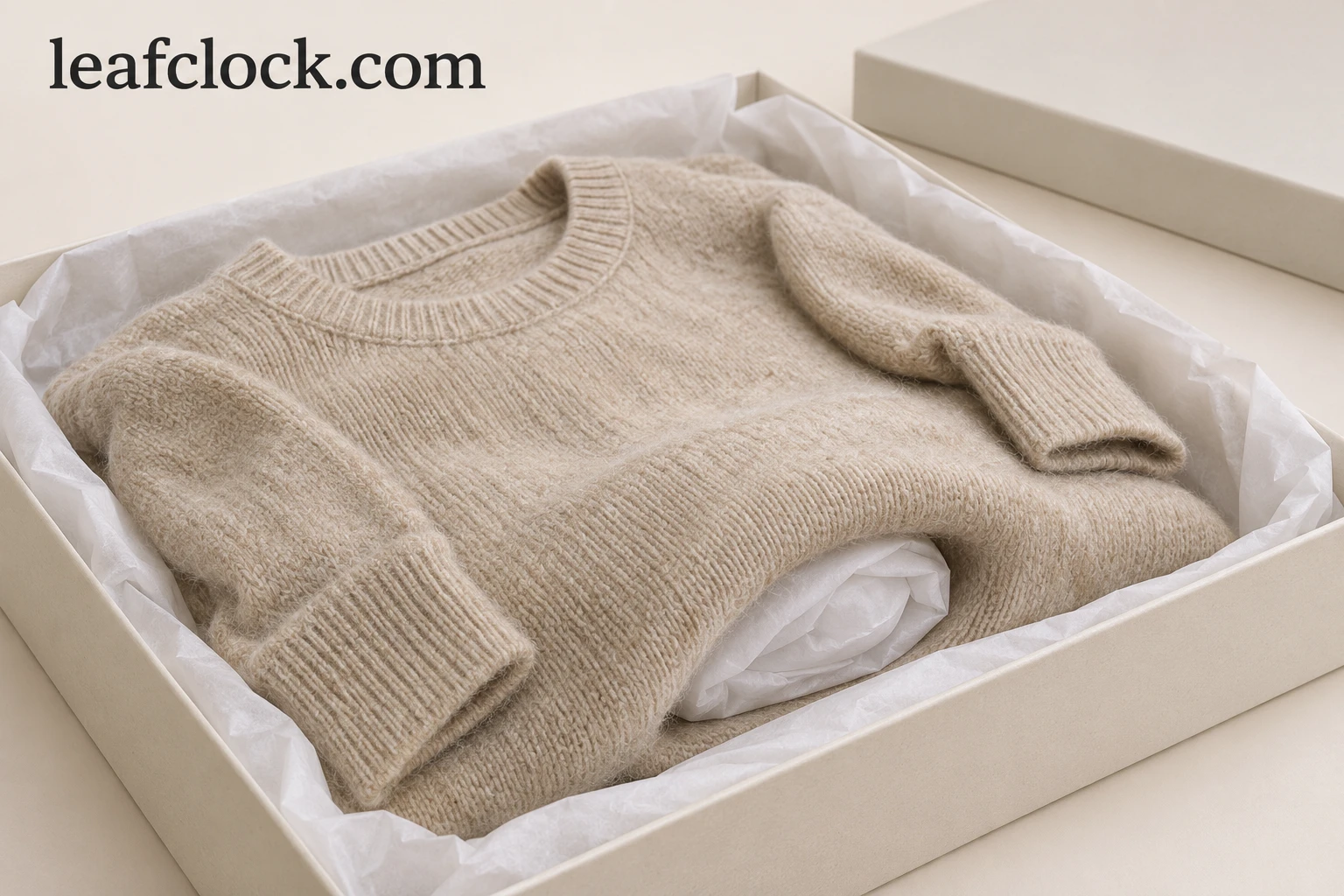
For fragile textiles, the Textile Museum explains how padding folds reduces pressure. That preservation principle is useful for a cherished garment; it does not turn every cotton T-shirt into a museum object. Give ordinary clothes sensible space, and reserve specialist packing for pieces whose condition or value warrants it.
Are plastic bins or vacuum bags better?
Use a suitable rigid bin as the default for sturdy folded clothes, and choose compression only when the garment maker permits it. “Plastic” describes many products: a sturdy storage box, thin dry-cleaning film and a vacuum bag provide different protection and exert different pressure.
For preserved textiles, the Canadian Conservation Institute accepts polyethylene boxes and acid-free cardboard, while discouraging thin dry-cleaner garment bags for lasting storage. Its guidance concerns conservation; use the care label to clean modern everyday clothing.
Vacuum bags save volume, but their suitability depends on the garment. Woolmark notes moisture and delicate-clothing limitations even while describing their space-saving benefit. Keep delicate shapes and down out of prolonged compression; Rab’s down-jacket advice is specifically to store uncompressed. If you use a vacuum bag for a permitted sturdy item, start with fully dry clothing, check the seal during storage and inspect the contents when reopening it.
A breathable fabric cover suits hanging garments in a clean, dry closet. It offers dust protection while leaving the garment exposed to the room’s humidity, and its closures may not exclude insects. Choose the room and pest protection together with the cover.
Prevent moth damage with cleaning and inspection
Start with clean, pest-free clothing and a clean storage area, then use a well-sealed container for susceptible items where the garment and conditions allow it. Look inside folds and under collars for holes, surface damage, webbing or cases before an item joins the rest of your wardrobe.
Cedar scent is an unreliable substitute for this routine. University of California IPM describes cedar’s limited effectiveness and loss of activity over time, and recommends proper storage and regular monitoring. Clothes moth larvae can attack animal fibres, including wool; clean appearance alone is insufficient to rule out insects.
If you find signs of infestation, isolate the affected garment from clean clothes and obtain treatment advice that suits its material. For a persistent problem, use a pest professional; for fragile or valuable textiles, involve a conservator. Avoid improvising heat, freezer or chemical treatments from advice meant for a different fabric.
Inspect while stored and before wearing again
Make inspection part of storage, with extra checks after a leak, a damp spell or evidence of pests nearby. Put the next check in your calendar when packing, and choose a frequency that reflects the room and the garment’s vulnerability. The aim is to catch a change while you can act on it, not to leave a box untouched until a promised expiry date.
When opening the container, check the container and clothing before returning them to your regular closet:
- Look for moisture, staining, pest evidence or a musty smell. Keep affected items separate while investigating the cause.
- Unfold garments carefully and look at seams, folds, fastenings and elastic. Compare with any damage you noted when packing.
- Follow the permitted care route if cleaning is needed, then reassess fit and function when the item is dry.
- Check specialist apparel against its maker’s instructions before relying on its performance.
A musty smell needs investigation rather than masking with fragrance. Visible mold calls for appropriate cleaning advice and correction of the storage conditions before reuse. For sound everyday clothing, decide what to keep or repair using the clothing lifespan checklist.
How long do clothes last in storage?
Clothes have no single storage expiry measured in years. Material, construction, condition at packing and the storage environment determine what you find when you reopen the box. Use its packing date to organise checks and retrieval, rather than as a countdown to disposal.
An unworn garment can still need attention, while an older item may remain useful. Inspect the actual fabric, fit and function. If a repair can restore the role you need, consider that route before replacing it. For a garment with a manufacturer-specified storage limit or protective purpose, follow those instructions instead of applying a general wardrobe rule.
Frequently asked questions
Can I store clothes in cardboard boxes?
Yes, but choose the box for the job. Acid-free archival boxes can suit delicate textiles in an appropriate environment. Ordinary moving cartons are a poor default for prolonged storage where moisture or pests are concerns. For sturdy everyday garments, start with a clean, dry lidded bin and a suitable room.
Should I wash clothes after taking them out of storage?
Not always. Inspect them first and use the garment’s care instructions to decide on cleaning. Address dirt or odour before wearing, and keep items with mold or pest evidence separate while seeking suitable treatment advice. Time in a box alone does not establish which washing method a garment can tolerate.
Do vacuum bags kill clothes moths?
No. Treat a household vacuum storage bag as packaging, not as a verified pest treatment. Pack only clean, pest-free garments and monitor them. If insects or damage appear, isolate the affected items and choose a treatment appropriate to their material with suitable garment-care or pest-control guidance.
For apparel brands: keep storage advice and replacement cues clear
Give customers a storage routine alongside any on-garment use reminder. With the Leafclock® Visible Lifecycle Intelligence System, the wearer compares the changing functional area with the reference area to read the cue configured for the product.
We customize target wash-and-sun-dry or wash-and-tumble-dry cycles, or an intended replacement interval, around the product’s care, use and environmental conditions. That cue supports communication during use; it does not detect storage mold, insects or remaining fabric strength. Share your garment and care routine through Leafclock customization to discuss a suitable sample configuration.