Choose among 3 label functions: passive UHF RFID for checkpoint identification, NFC for a phone-accessible care or service link, and a visual lifecycle indicator for an on-product replacement or inspection instruction. Compare the required user action, record and care conditions first. Combine technologies when the garment needs more than one function.
Start with the decision, not the label name
| If your team needs to… | Evaluate first | What must pass |
|---|---|---|
| Identify garments at receiving, dispatch or a controlled checkpoint | Passive UHF RFID | The reader output reconciles with the shipment or inventory record at the defined station. |
| Give a wearer a phone-readable care, repair or product link | NFC tag or QR code | A representative phone opens the correct destination and the brand can maintain it. |
| Prompt a wearer or operator to inspect, repair or replace a textile | Visible lifecycle indicator | The user finds the functional and reference areas and takes the instructed action. |
| Keep a history of receipt, repair or retirement | Identifier plus event system | Each recorded event has a defined what, when, where and why; the tag alone is not the history. |
The most common selection error is treating “smart” as one feature. RFID identification, NFC interaction and a visible replacement cue create different outputs. A digital tag can support a record only when readers, software and operating rules capture events; a visual cue can guide an on-product decision without a reader or phone.
Choose passive UHF RFID for controlled identification
Passive UHF RFID is the practical starting point when a warehouse or laundry needs to identify multiple tagged items at a defined read point. GS1 Gen2 specifies the air interface used by passive UHF tags and readers; the buyer still has to specify the permitted band, reader layout, tag placement and operating workflow. Technical reference
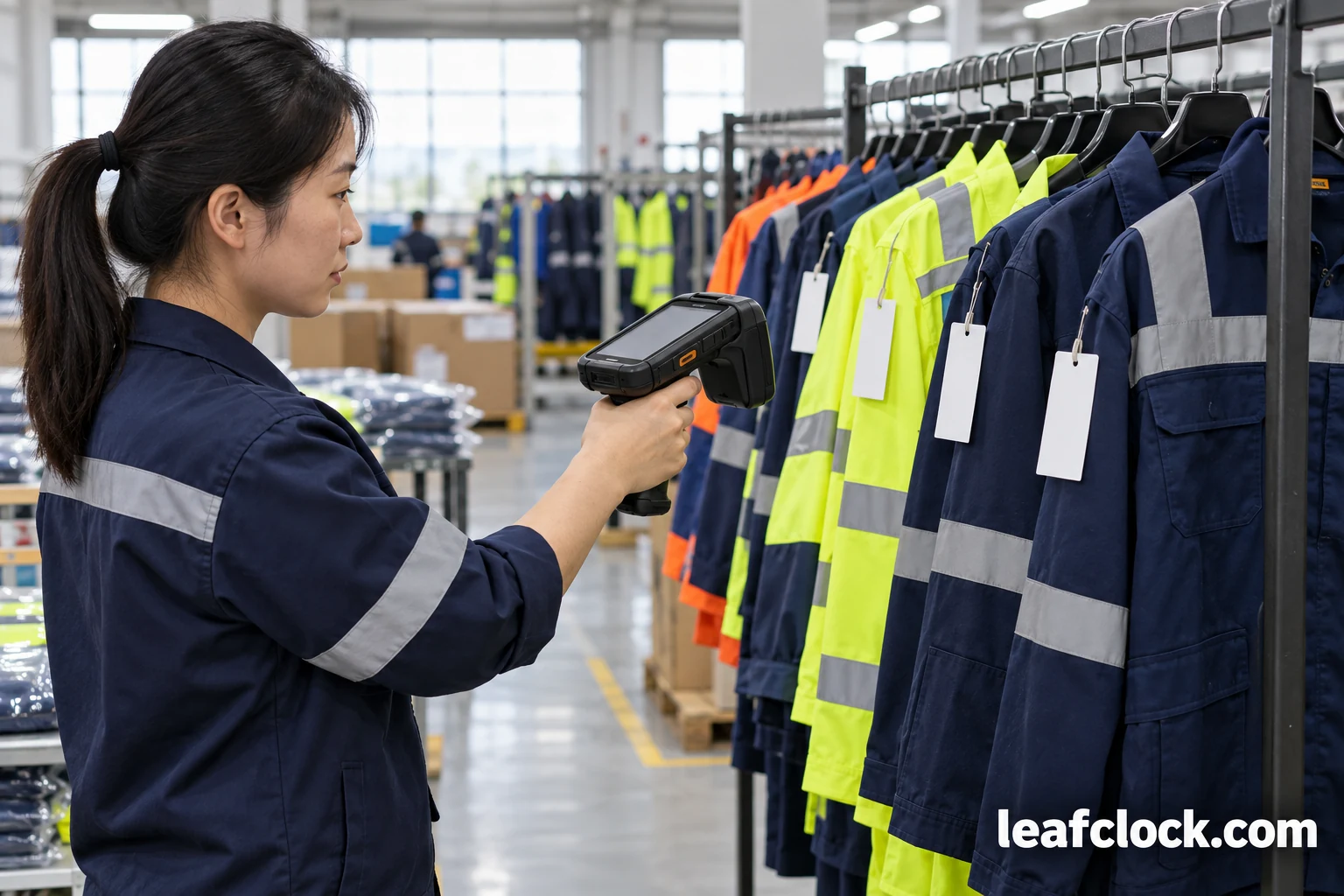
RFID is a family, not a single implementation. This comparison uses passive UHF for apparel checkpoints; active RFID is a separate battery-powered design with different hardware, maintenance and economics. Do not assume every RFID deployment can be read through the same packaging, garment stack or laundry route. Test the finished item, not only an inlay on a bench.
The reader supplies the observation, but the business system supplies the meaning. If the operation needs “received against purchase order,” “returned after wash” or “retired after inspection,” map that event to an identifier, location, timestamp and responsible process. GS1’s EPCIS and CBV guideline describes visibility events through what, when, where, why and how dimensions; use that model to define the record before buying readers. GS1 EPCIS event guidance
The cost drivers are readers and antennas, tag encoding, middleware or EPCIS integration, installation at each checkpoint, exception handling and ongoing data ownership. A bulk-read pilot is justified when missed or duplicate reads have a measurable operational cost. It is the wrong first tool when the missing decision is simply whether a wearer should inspect one garment during use.
Choose NFC when the wearer needs a deliberate phone tap
NFC is a short-range phone interaction. The NFC Forum describes a 13.56 MHz radio, a typical range of up to 2 cm and battery-less tag operation when the tag is powered by the phone’s field. Technical reference
Use NFC for a care page, repair booking, authenticity workflow or product story that changes over time and needs a deliberate tap. The tag can carry an NDEF record such as a web link, but the garment still needs a readable location cue and a destination owner. Test the actual handset mix, antenna placement, folded garment, carrier and care route. Provide a printed or QR fallback when the customer cannot or does not want to tap.
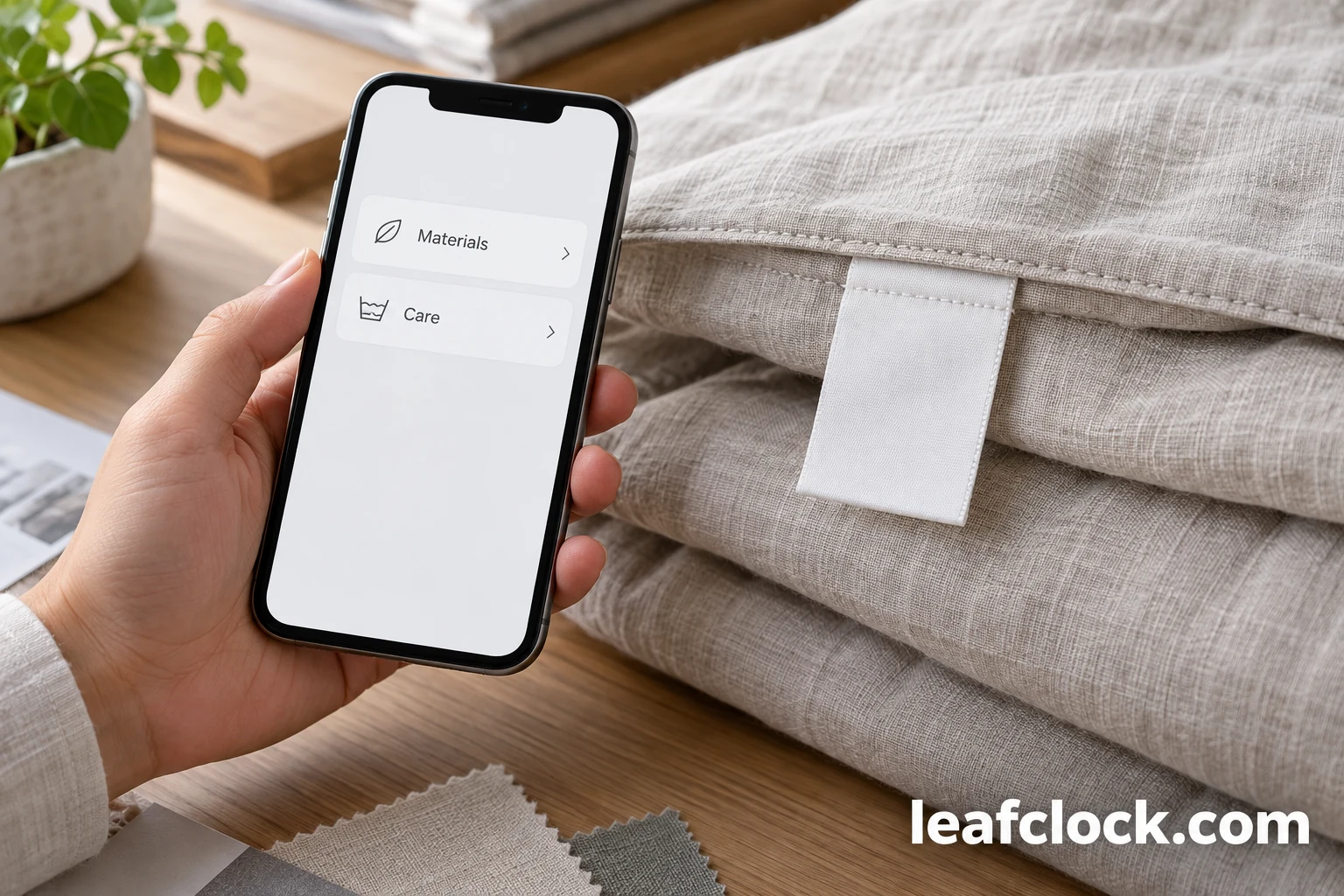
NFC is not a replacement-time signal by itself. A tap can open instructions or submit an event, but it does not tell the wearer that a textile has reached the brand’s intended replacement point unless the surrounding product and workflow provide that rule. The cost drivers are the tag and antenna, encoding, web destination, content maintenance, phone compatibility testing and customer-support path.
Keep identity and service available after the hangtag is gone
Retain the retailer-approved inventory identifier, and put a lasting care or service link on a component the customer keeps. A style-level destination is enough for shared care instructions; use a batch identifier for batch-specific service and a serial identifier when individual history changes the decision. Maintain an old-style or default service page after a product is discontinued.
An NFC web link or QR code can open a browser destination on compatible devices without requiring the brand’s own app. Test the final link and fallback in the intended customer journey. A successful tap or page visit shows access, not a completed repair; confirm the service outcome separately.
Distinguish identification from authentication
A printed serial or static web link can be copied. Trace the identifier to supplier and production records before treating it as evidence of origin. When authentication is required, evaluate the secure tag feature, its attachment and the verification service together, including a copied or swapped tag and an unavailable backend.
NXP’s NTAG424 DNA application note describes secure dynamic messaging with backend verification for that specific chip family. That is a separate security design to evaluate; an ordinary NFC care link provides access to information. A visual replacement indicator supplies the configured on-product instruction. NXP secure messaging application note
Choose a visible lifecycle indicator when the action belongs on the textile
Leafclock is a passive visual indicator: the user compares a changing functional area with a reference area on the same label. The label can be configured around target wash-and-sun-dry or wash-and-tumble-dry cycles, or an intended replacement time, using the product’s frequency, care and exposure conditions. Read the indicator instructions before specifying the sample. Technical reference
The physical format can be heat-transfer or sewn, with placement, carrier, size and artwork set for the product. Wash-Sun uses blue moving toward pink; Wash-Dry uses yellow moving toward purple or light purple. The cue is a visible prompt to inspect or follow the product’s replacement guidance. It is not a phone link, an electronic event log, a bacteria detector or an automatic measurement of remaining performance.
The 30-cycle demonstration uses simulated washing and light aging, illustrated at 0, 5, 10, 15, 20, 25 and 30 cycles, not a universal life or technical ceiling. For a real product, provide the intended wash route, drying method, expected frequency, environment and replacement goal. A sample review should ask whether users can find both areas, compare them in ordinary light and choose the intended next action. The cost drivers are configuration, carrier and attachment, sample evaluation, care-copy integration and any project-specific validation, rather than a reader network.
Compare the options at the point of use
| Decision factor | Passive UHF RFID | NFC | Visible lifecycle indicator |
|---|---|---|---|
| Primary output | Reader-visible identifier | Phone-readable payload or link | On-product visual replacement prompt |
| User/asset action | Place item in a defined read zone | Tap compatible phone at close range | Look at functional and reference areas |
| Digital infrastructure | Readers, antennas, software and event rules | Tag encoding, destination and content owner | No reader or app for the comparison itself |
| Best first pilot | Receiving, dispatch or laundry checkpoint | Care, repair or product-information journey | Inspection, repair or replacement decision |
| Main failure mode | Missed/duplicate reads or unowned events | Unreadable tap or stale destination | Unclear instruction or wrong care calibration |
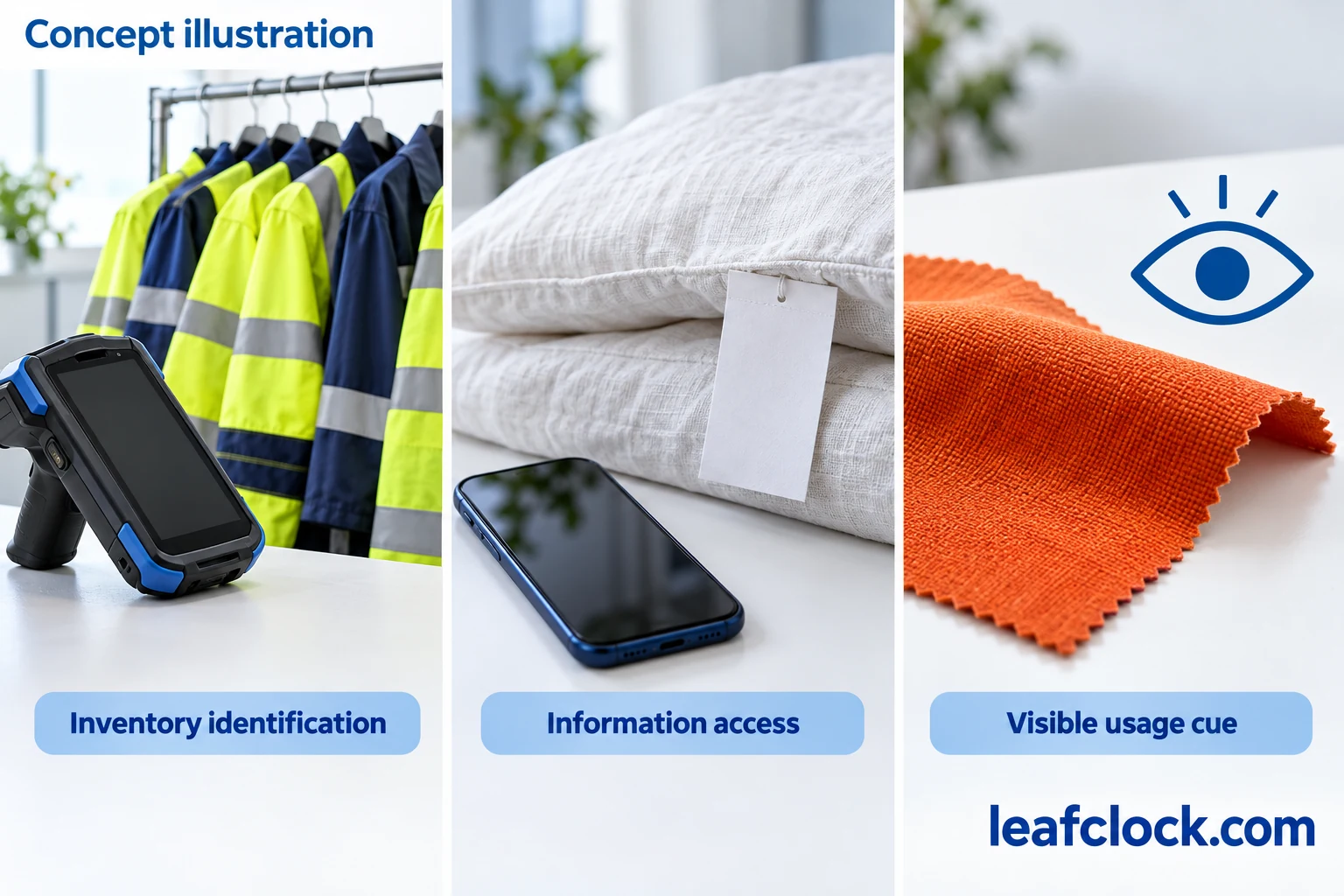
Choose RFID when the business problem is “which items are here?” Choose NFC when it is “what should this person open now?” Choose a visual cue when it is “when should this person inspect or replace this item?” If the program has all three questions, use complementary components and assign separate acceptance tests rather than calling one label a complete system.
Three decision examples
A uniform fleet
Use passive UHF at dispatch if the operator needs a piece-level inventory checkpoint. Add NFC if the wearer needs a current care or repair link. Add a visual cue only if the fleet has a defined inspection or replacement rule tied to wash-and-dry conditions or a target replacement time. Record the actual condition and decision; the cue prompts the check but does not decide retirement.
A consumer apparel line
Use NFC when the brand wants a maintained care or repair journey. Use a visual cue when the product promise includes a visible replacement reminder that works without a phone. Use RFID only when the supply-chain or store operation has a reader-based identification task worth the integration cost.
A rental or laundry operation
Start with the decision that is currently missed. RFID can support checkpoint identification; NFC can expose instructions to a technician; a visual cue can prompt a closer look at a repeatedly laundered item. Keep the acceptance test and record for each job separate.
Specify the event and its owner
| Observation | Required record distinction |
|---|---|
| Receiving read | Identifier, checkpoint and receipt record; this is not a completed wash |
| Completed laundry load | Matched load completion and garment membership |
| Manual inspection | Inspector input, observation and action |
| Corrected or duplicate event | Original reference, correction reason and reconciled record |
| Replacement tag | Link the new identifier to the existing asset history |
Separate a public care page from private operator or wearer records. Assign responsibility for late entries, duplicates and corrections before relying on the history for a replacement decision.
Ask suppliers for comparable installed offers
Use the same finished textile, care route, intended task, volume and accepted-unit definition for each RFQ. Request setup and recurring costs, installed unit price, rework responsibility, sample lead time and the evidence required for production release. Agree who handles failed encoding, a broken destination or an unreadable cue.
Qualify the assembled product before release
Record a baseline read, tap or visual comparison on the installed sample, then repeat the required task after its specified care. Keep the approved specimen and specification revision. Assign the factory and brand owners for holding, reworking or releasing suspect lots. Recheck the affected function when the fabric, carrier, attachment, factory process or care route changes.
For a label artwork that places a visible cue next to a QR or NFC instruction, ask the wearer to point to the cue and explain its action before opening the linked page. Then check separately whether the link opens the intended care or service content for that style.
Integration checklist before requesting a sample
1. Name the decision and its owner: receiving, care-content, repair, inspection or retirement. 2. Define the required output: identifier, phone link, visual comparison or a combination. 3. Specify the finished textile, placement, attachment, care route, expected frequency and environment. 4. Write the acceptance test, including what happens after a missed read, failed tap or ambiguous visual state. 5. For a Leafclock configuration, include the target wash-and-sun-dry or wash-and-tumble-dry cycles, or target replacement time, then review a physical sample.
For a Leafclock application fit, see the applications page before the customization discussion and sample box process.
Put the guidance into practice
Assign an owner for the QR destination
Give the destination an owner who can update instructions and handle moved pages. Put the immediate interpretation beside a visual cue so that a customer can read it on the textile. Use the QR destination for information that needs more room or regular updates.
Specify a measurement before choosing electronics
Name the variable the product must measure, who uses the result and what they do when data is missing. If the task is a scheduled reminder, evaluate that separately from detecting or recording a product condition.
Test a realistic failure before release
Plan a test for a plausible failure at the point of use, such as a tag that becomes difficult to read. Record who notices it, who acts on it and what fallback is available. Request care-condition evidence for the assembled textile before approving the feature.
FAQ
Is passive RFID the same as a passive visual indicator?
No. Passive RFID uses energy from a compatible reader to communicate an identifier. A visual indicator is read by comparing physical areas on the textile. One supports reader-based identification; the other supports an on-product inspection or replacement prompt.
Can one garment use RFID, NFC and a visual indicator?
Yes, when each component has a separate job and acceptance test. RFID can support a controlled checkpoint, NFC can open a phone-readable destination, and a visual cue can prompt an inspection or replacement decision. Test placement, care compatibility and user instructions together on the finished garment.
Does Leafclock store wash history or detect bacteria?
No. Leafclock is a passive visual indicator. The user compares its functional area with the reference area. It does not transmit a wash history, automatically count events, diagnose hygiene or detect bacteria.
Can the Leafclock target be a time interval instead of a wash count?
Yes. A target replacement time can be used as a configuration input together with expected use frequency, care routine and relevant exposure conditions. The finished recommendation is established through the product requirements and sample discussion; it is not a universal calendar date for every wearer.
See the related product guidance.