About the brand
Wacoal is one of Japan's best-known intimate-apparel groups. Founded in Kyoto in 1946 and listed on the Tokyo Stock Exchange, the company has built its reputation around fit, comfort and body-centered product development.
That focus is supported by long-term research. Wacoal established its Human Science Research & Development Center in 1964 and connects customer feedback, anthropometric research, product planning, manufacturing and quality control across its value chain. When a group with this depth of intimate-apparel expertise adds a lifecycle cue to a finished product, it makes the application especially relevant for other brands to study.
The application
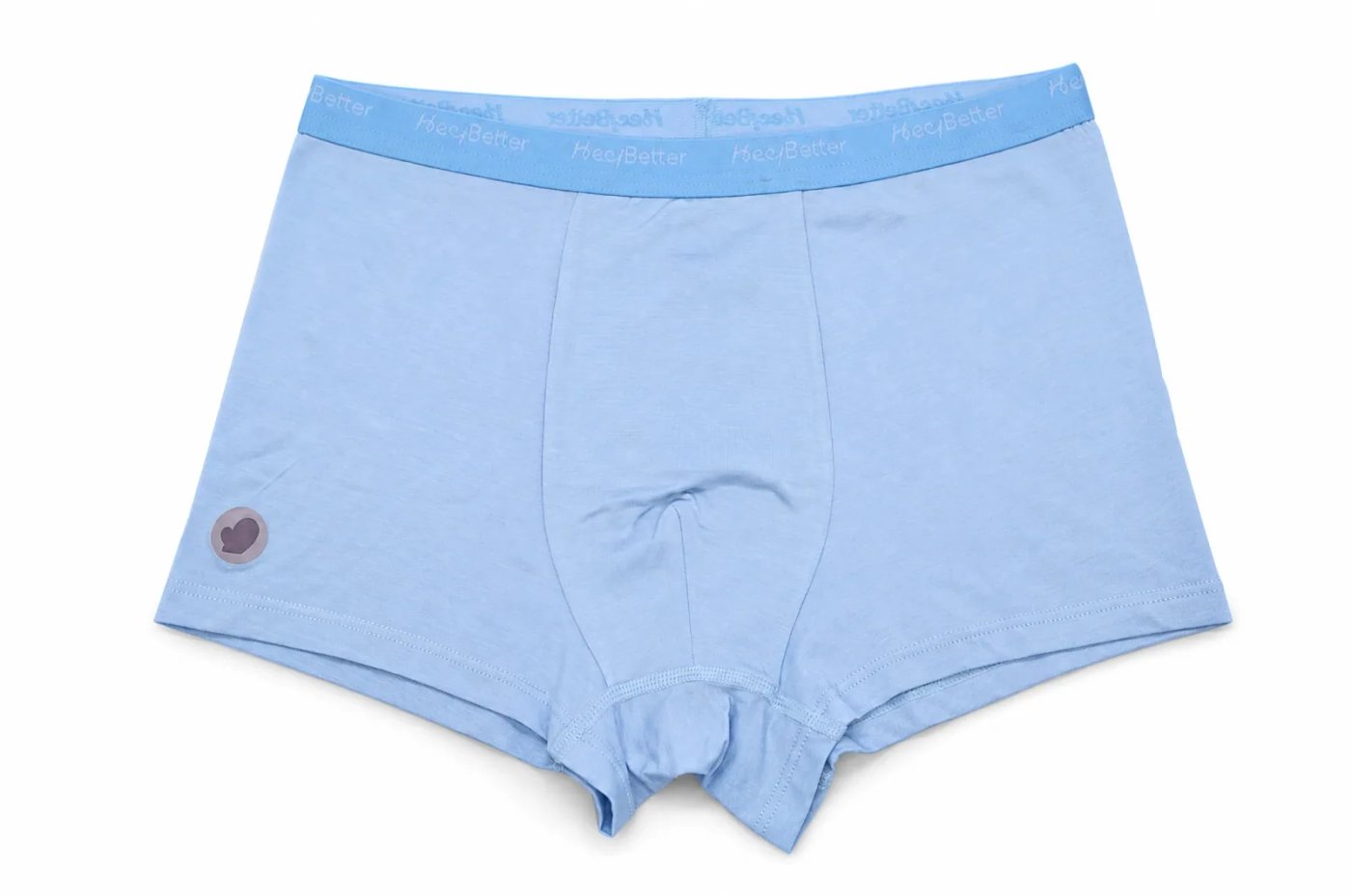
Wacoal and Leafclock worked together on bras, briefs and other intimate apparel. The featured briefs use a small ice-cube transfer on pale ribbed fabric, below the waistband and off to one side. A pink area beneath the cube provides the visual replacement state, and the package tells the wearer to replace the garment when the indicator turns pink.
The product and packaging divide the communication work without making the wearer learn a complicated system:
- The garment carries a discreet cue. The compact motif sits where it can be found during folding and care, without adding electronics or a separate device.
- The box teaches the change. Two versions of the same ice cube show the initial and pink states at a larger, easier-to-read size. The wearer learns the comparison on the box, then recognizes the same motif on the briefs.
- The visual language stays consistent. Repeating one motif from packaging to product connects the instruction at purchase with the decision the wearer makes later.
The regular washing and drying instructions remain part of garment care. The lifecycle cue adds a visible replacement layer on top of them, configured around the product's intended use and care routine.
What this signals
This was an implemented product program that moved into market use, not a stand-alone concept graphic. It shows how a premium innerwear brand can add replacement guidance while respecting the discreet presentation expected in a close-to-body product.
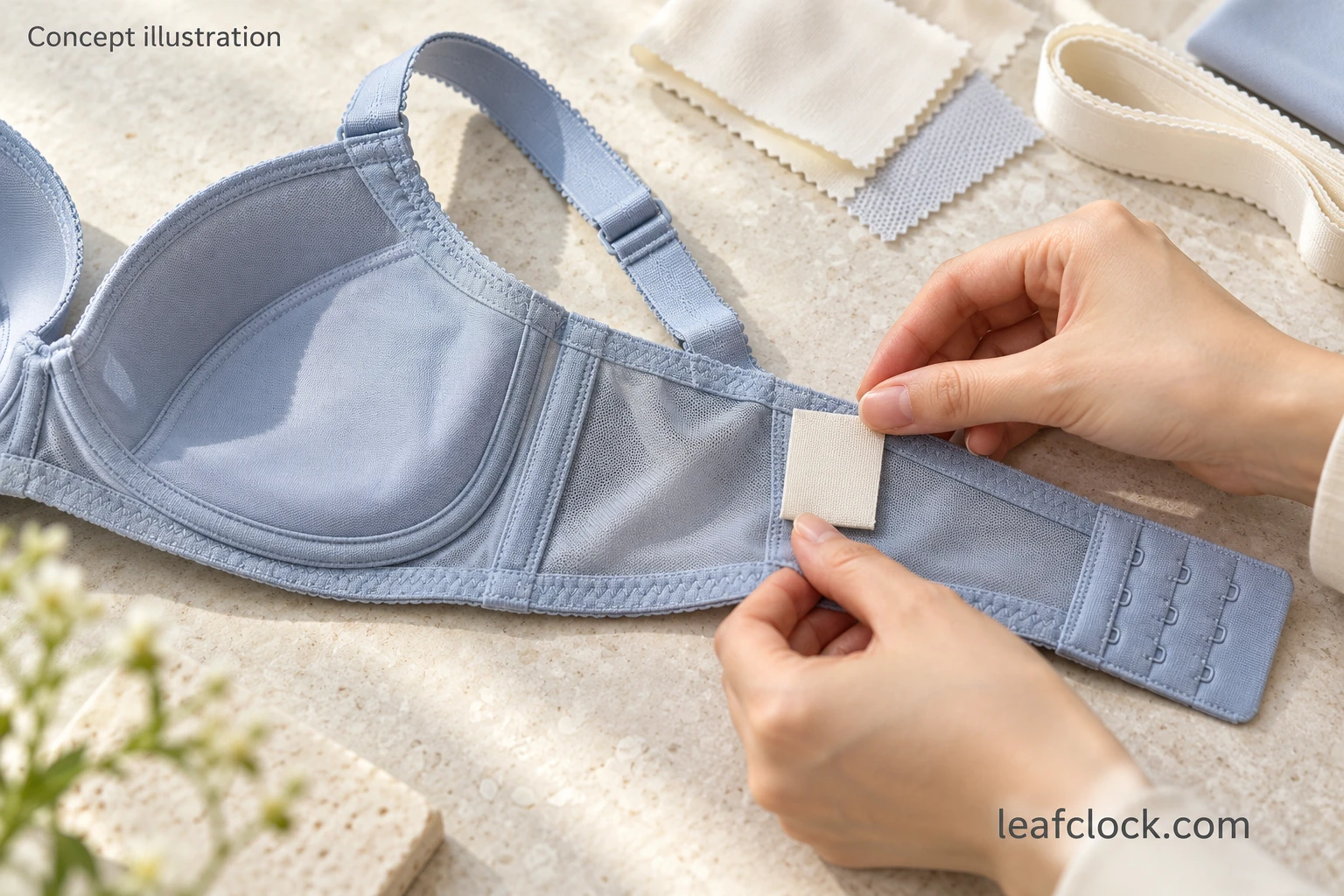
For other brands, the signal is straightforward: a lifecycle cue does not need an app, electronics or a complete care-label redesign to become useful. It can be a compact printed feature, taught by the package and read directly on the garment. Leafclock configures that cue for the approved artwork, product, fabric and care routine so the package and garment can carry one coherent explanation.
Next step
Share your brief construction, fabric, packaging and care routine to review the transfer at finished size and align the on-garment cue with the two-state explanation.