Before piloting a textile lifecycle label, make 3 decisions about the component, the finished garment and the reader’s action. Ask the supplier to identify the exact label construction and provide an installed sample. Set separate acceptance criteria for the component documentation, the attachment and what users should understand when they see the cue. For a Leafclock configuration, that point can be a target replacement stage or a check stage, based on the product brief and care routine.
Request the records that identify what you will buy
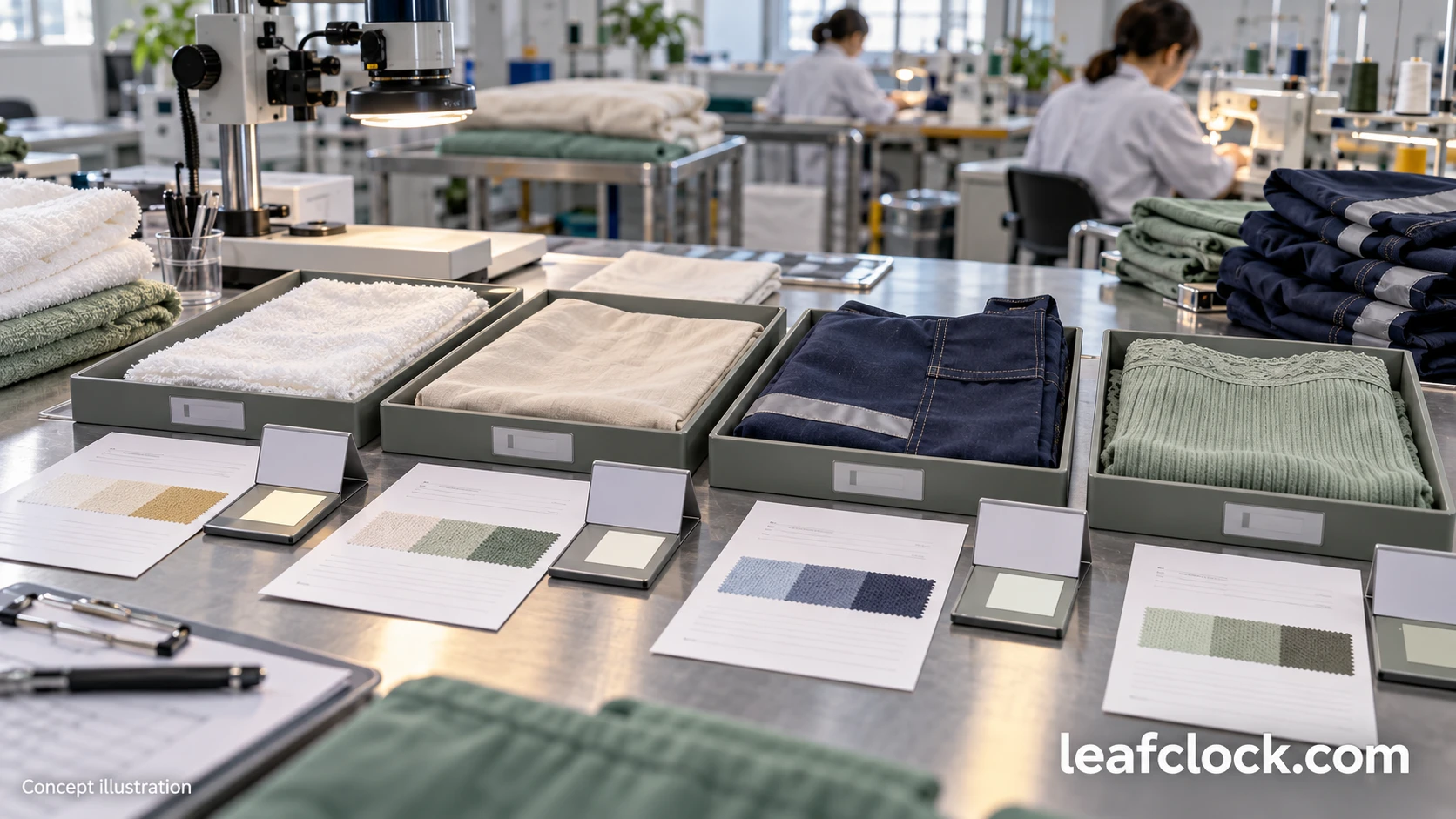
Ask for the part number and revision, carrier, graphic, application instructions and the materials or garment positions proposed for your sample. A report on loose woven tape gives little information about a transfer applied to stretch mesh. Check what was tested, when, under what procedure and which article or colours the result covers.

If your buyer specifies OEKO-TEX STANDARD 100, compare the product class and certificate description with the exact label. Use the issuer’s lookup for the number. Keep the covered article and any separate legal or buyer requirements in the sourcing record. STANDARD 100 and Label Check
For a Leafclock evaluation, share the intended washing, drying, exposure and frequency together with the target wash-and-sun-dry or wash-and-tumble-dry cycles or replacement interval. Ask for the correct reference artwork and a sample made for the proposed location. Set a clear action for the selected cue, such as inspecting seams and elastic.
Decide what stops the evaluation
| Decision | Proceed when | Hold or change the sample when |
|---|---|---|
| Component approval | The exact article and applicable documentation match | A supplier has changed a carrier, print or adhesive without review |
| Garment integration | The approved sample is comfortable, attached and readable through the agreed care check | Edges lift, the carrier irritates, or a seam hides the reference |
| Cue and instruction | A reader can identify the comparison areas and state the intended action | Readers interpret the cue as an exact wash counter or care symbol |
| Pilot scope | The team has an approved SKU, a care route and an observation owner | Different factories or care routes would make the trial hard to interpret |
Suppose a supplier proposes a transfer whose appearance reads well on a flat swatch. The buyer’s actual product has a coated stretch panel. Hold approval for the application until the factory checks that panel with the intended settings and records how the installed label looks after care. Use the swatch to discuss artwork while the attachment question remains open.
Price and approve the next step separately
Ask who will supply the trial units, apply the label and retain sample records. Request a quote for the sample work and for the production configuration under discussion. Keep the trial sized to the question you need answered. A readability trial can tell you whether users can follow the instruction. A broader claim about use or replacement outcomes needs a separate collection plan.
Keep your decision in the purchase file with the sample revision and the reason to proceed, revise or stop. Use the pilot brief for the handoff and request a product-specific sample when you have the garment, care routine and target.
Work through one sample decision
Here is a planning example for a close-fitting knit garment with a sewn carrier. Give it an evaluation ID and record the garment revision, label model, installation position and agreed care route in the evaluation log. Keep the comparison fields visible when the garment is opened in the way a wearer would normally handle it.

At a review point, suppose the stitching is intact but a fold covers the reference area. Record “attachment intact; reference obscured when opened” rather than a single overall “pass.” The next action is to try a placement or fold change, then repeat the reading check. This example illustrates a decision process; the team still sets its own sample size, observation stages and acceptance criteria.
| Record | Useful entry | What it resolves |
|---|---|---|
| Evaluation ID and garment revision | One identifier shared by the sample, photo and log | Which physical item the decision concerns |
| Care route and observation stage | The agreed procedure and the actual completed stage | Whether two observations can be compared |
| Functional and reference areas | A clear photograph of both areas together | Whether the reading condition was recorded |
| User action | The action a reader describes after seeing the instruction | Whether the instruction communicates the intended next step |
| Decision and owner | Proceed, revise or stop, with the named reviewer | Who closes the issue before the pilot expands |
Keep observations and decisions in separate columns or notes. “Reference hidden” is an observation; “change the fold” is an action. Once revised, give the sample a new revision so the next photograph cannot be mistaken for the earlier construction. The evaluation template provides a place to agree the trial scope before filling the log.
Put the guidance into practice
Agree on the pilot exit rule
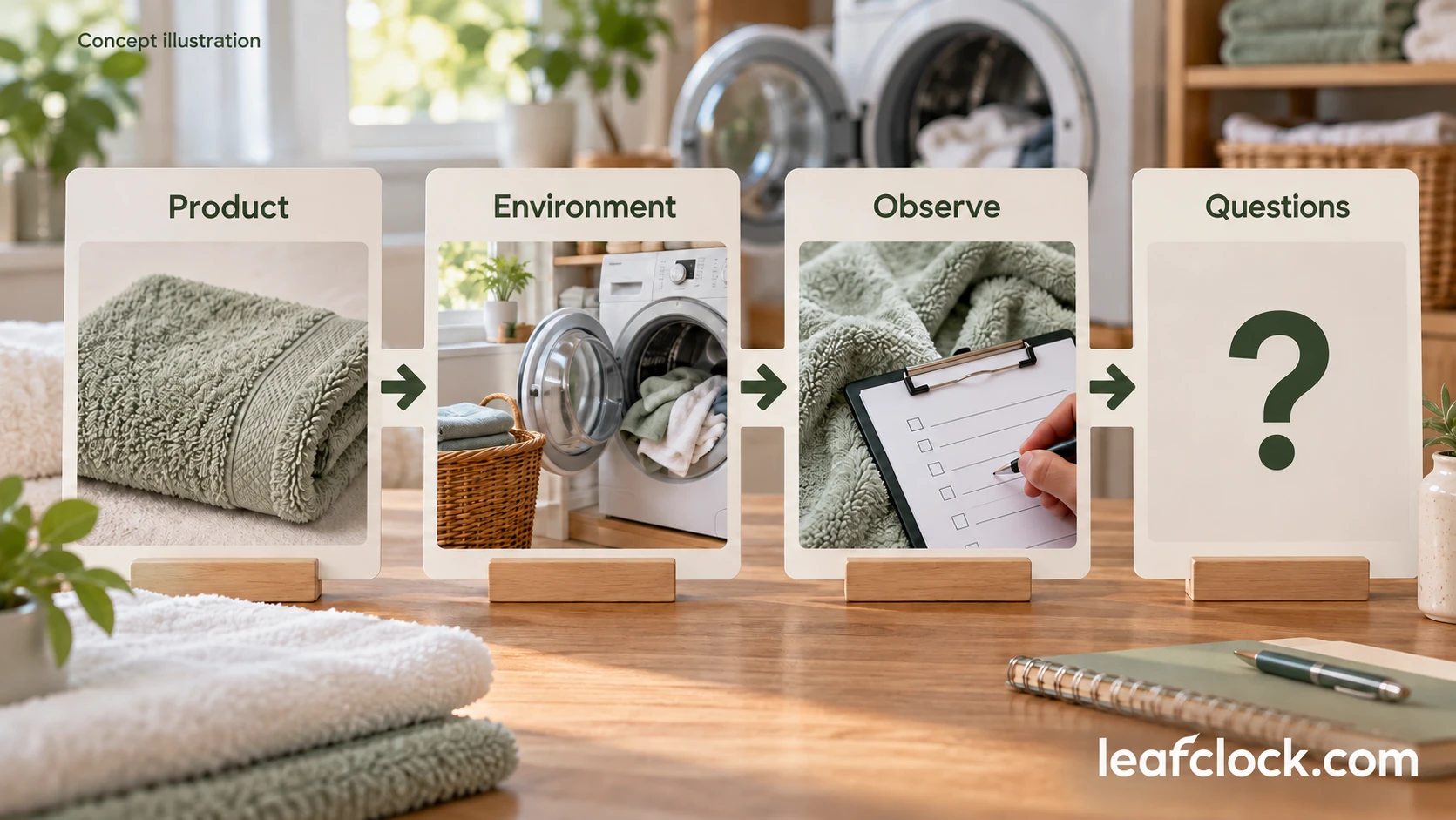
Use the actual care routine to plan observations. Before the trial begins, name the person who records a missed wash or checkpoint and the review that decides whether to repeat it, extend observation or hold the decision.
Add a procurement scorecard
Record what the wearer should see and do, the proposed calibration target, supplier evidence, factory changes and the need for an item record. Give each question an owner so the team can identify which gap must be resolved before the next sample.
See Leafclock textile label options for the product context.
Frequently asked questions
Does a supplier’s textile certificate approve the finished application?
No. Check the certificate for the article it covers and evaluate the actual label installation on the finished garment.
What should hold a pilot before it starts?
Hold it when the exact sample or approved care route is unknown, when needed component documentation is missing, or when the team has no agreed way to read the cue.