About the brand
Scarlet is an innerwear brand in AEON's retail assortment. AEON's public brand communication emphasizes fun, youthful styles and everyday essentials, connecting comfort with confidence and individuality. This Leafclock case concerns the authorized AEON offline-retail program for bras and underwear.
This retail context gives a replacement cue a clear role. A bra or pair of underwear may explain its materials and care at the point of sale, but the customer still makes later replacement decisions during ordinary wear and laundry. A visible cue on the product gives the brand a way to remain useful in that moment.
The application
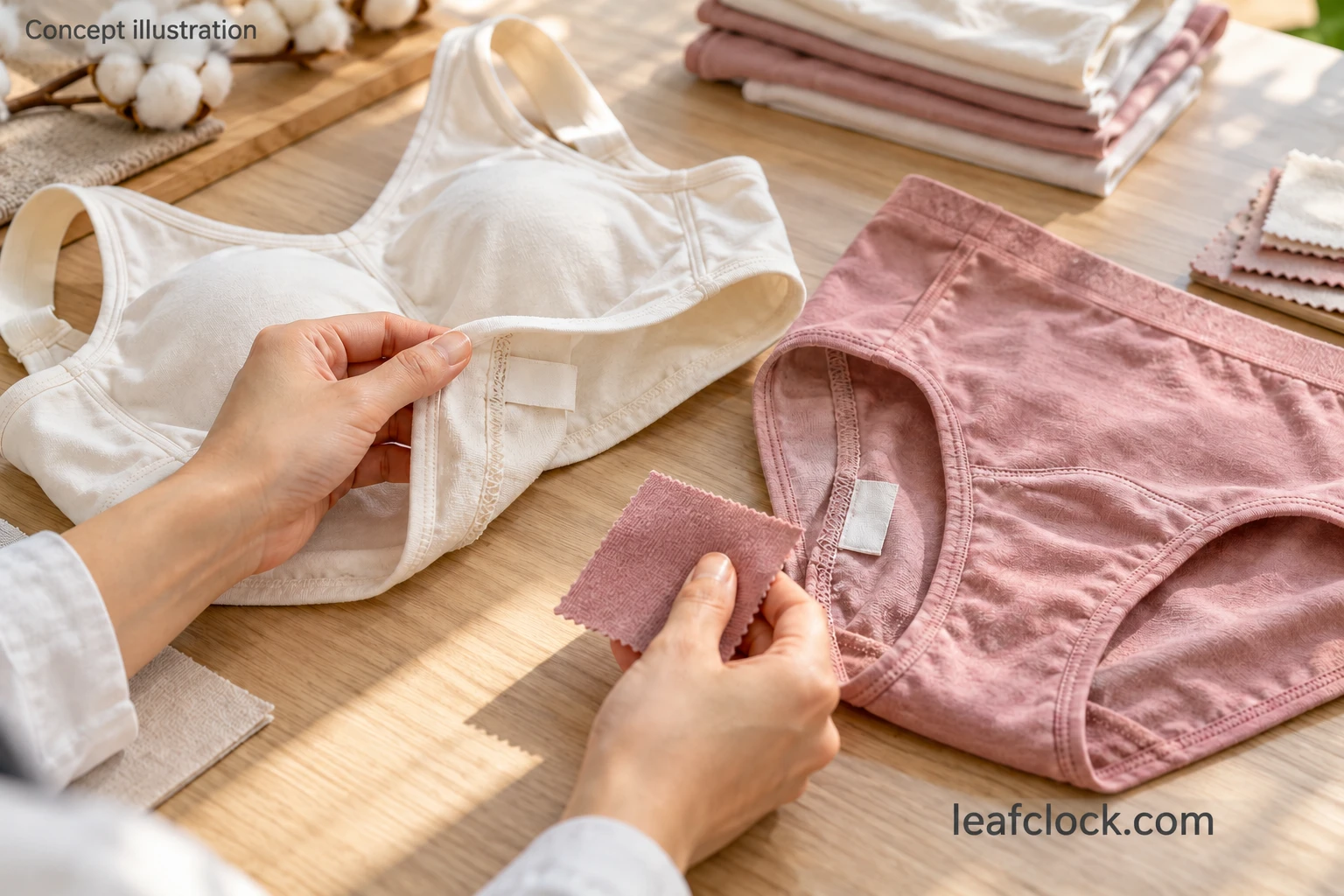
Scarlet and Leafclock put the cue into production on everyday bras and underwear for offline retail. The product task is deliberately discreet: add an understandable replacement cue within the familiar presentation of close-to-body essentials.
For a similar retail assortment, three decisions deserve attention:
- Make the reminder findable after unpacking. Review whether the approved sewn or printed cue is easy to locate once the garment is separated from its packaging.
- Carry one explanation across the assortment. Use the approved replacement instruction consistently across colorways, while checking its readability on each fabric and construction.
- Match the carrier to the garment. Adapt artwork, placement and carrier to the product's fabric, construction and care routine rather than treating them as a universal graphic.
The cue complements regular brand, size, material and care information. It adds a replacement decision layer without introducing electronics or asking the wearer to manage another device.
What this signals
Scarlet's production program shows that replacement communication belongs in mainstream innerwear, not only in a concept demonstration. A retail brand can add a functional ownership feature while keeping the product familiar and the message easy to explain.
For other underwear and bra brands, the useful lesson is the connection between a produced garment and the retail journey: the first explanation must still make sense after unpacking. Leafclock configures the signal around the approved product and care conditions so the garment, packaging and care communication can tell one coherent story.
Next step
Share your garment constructions, colorways, packaging and care instructions to review where the cue will be found after unpacking and how the same replacement message will read across the range.