About the brand
Youkeshu is a Chinese close-to-body apparel brand founded in Hangzhou in 2018. Starting with women's underwear, the brand has expanded into socks, thermal underwear, loungewear and other everyday essentials. Its public positioning connects comfort with plant-based materials and nature-inspired product development.
That makes the Leafclock application especially coherent: the replacement cue is not a separate technical story competing with the product. It extends the same everyday-comfort promise into the period after purchase, when a customer is using, washing and deciding whether to keep a textile in rotation.
The application
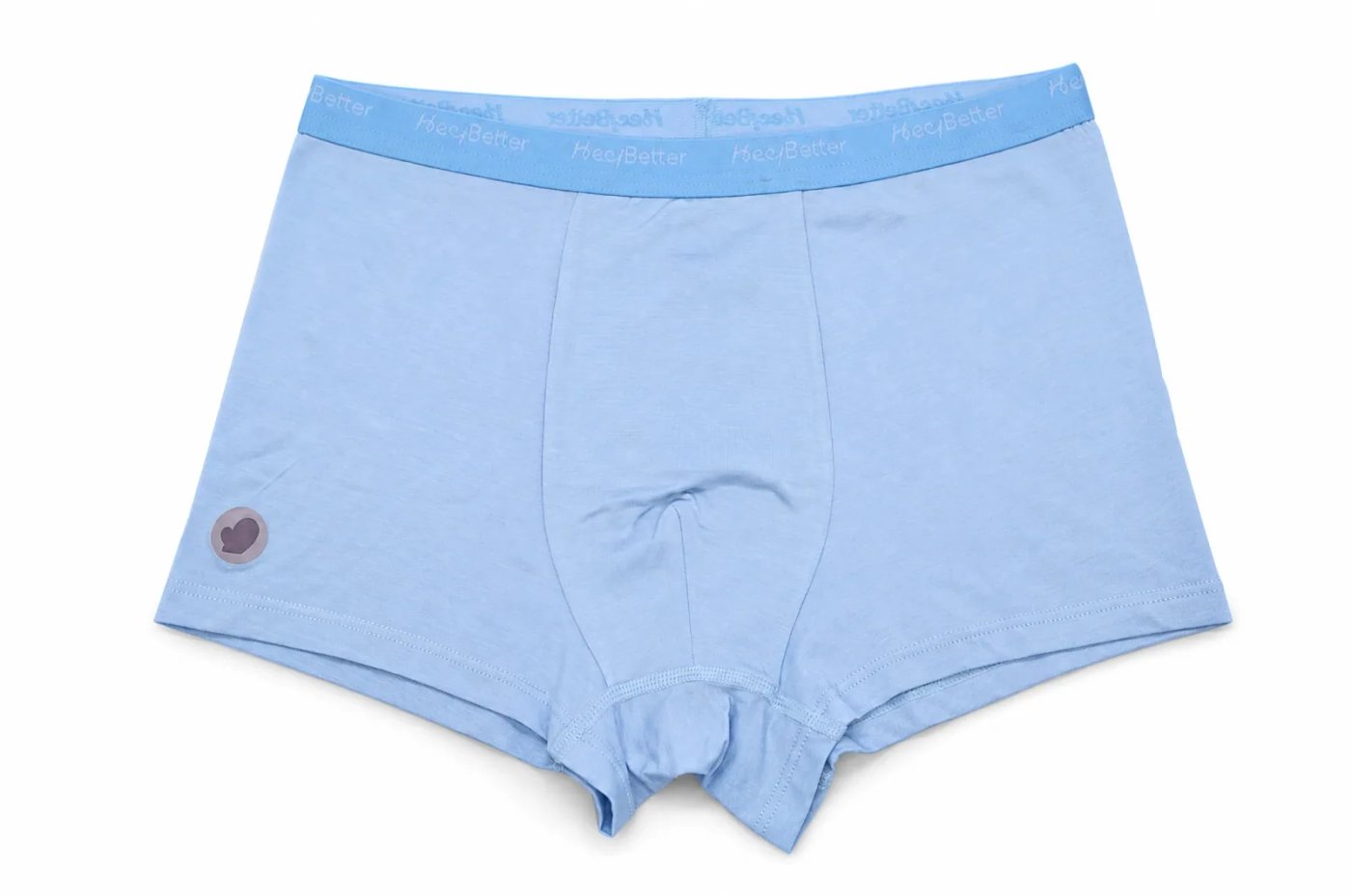
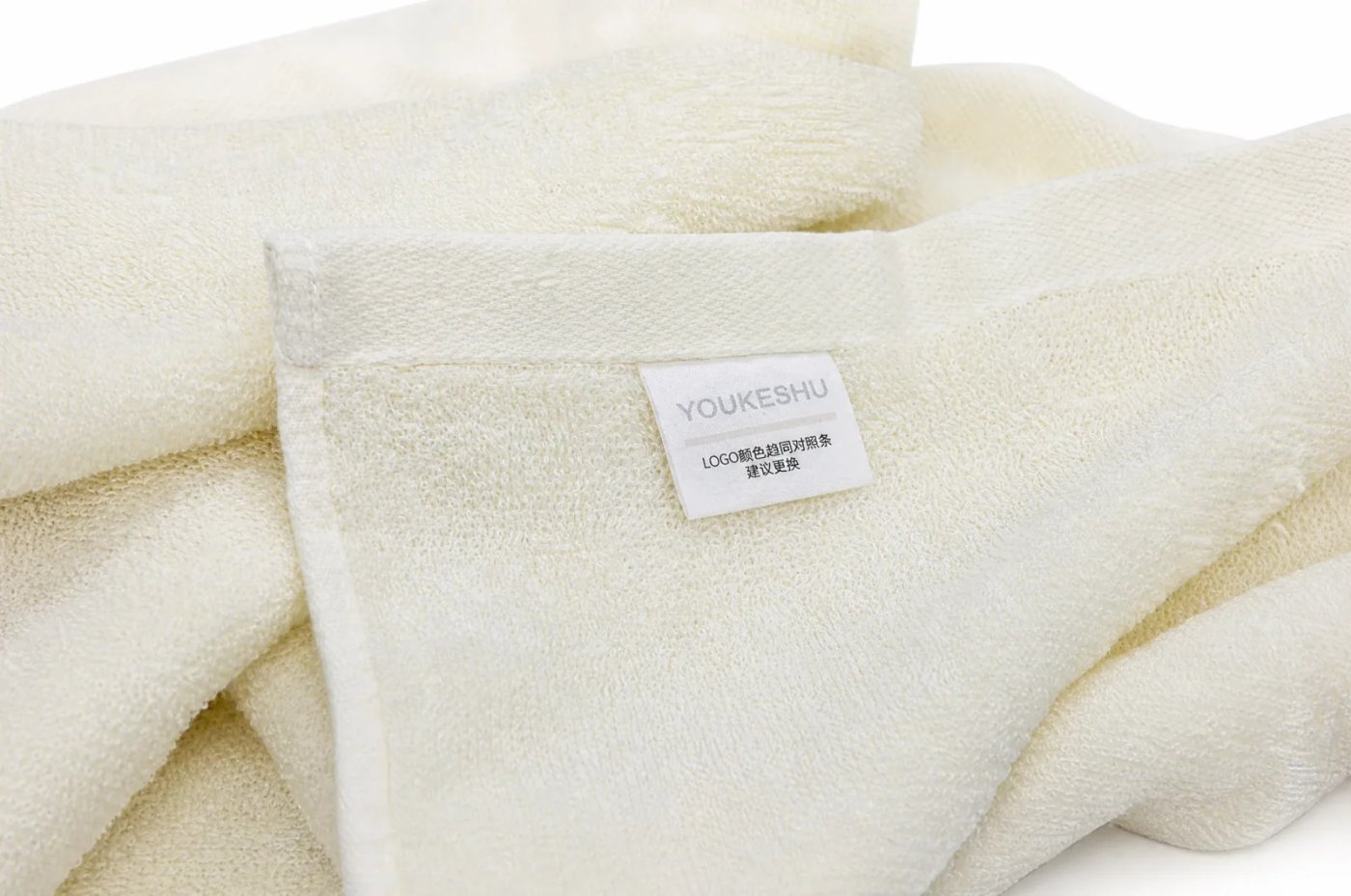
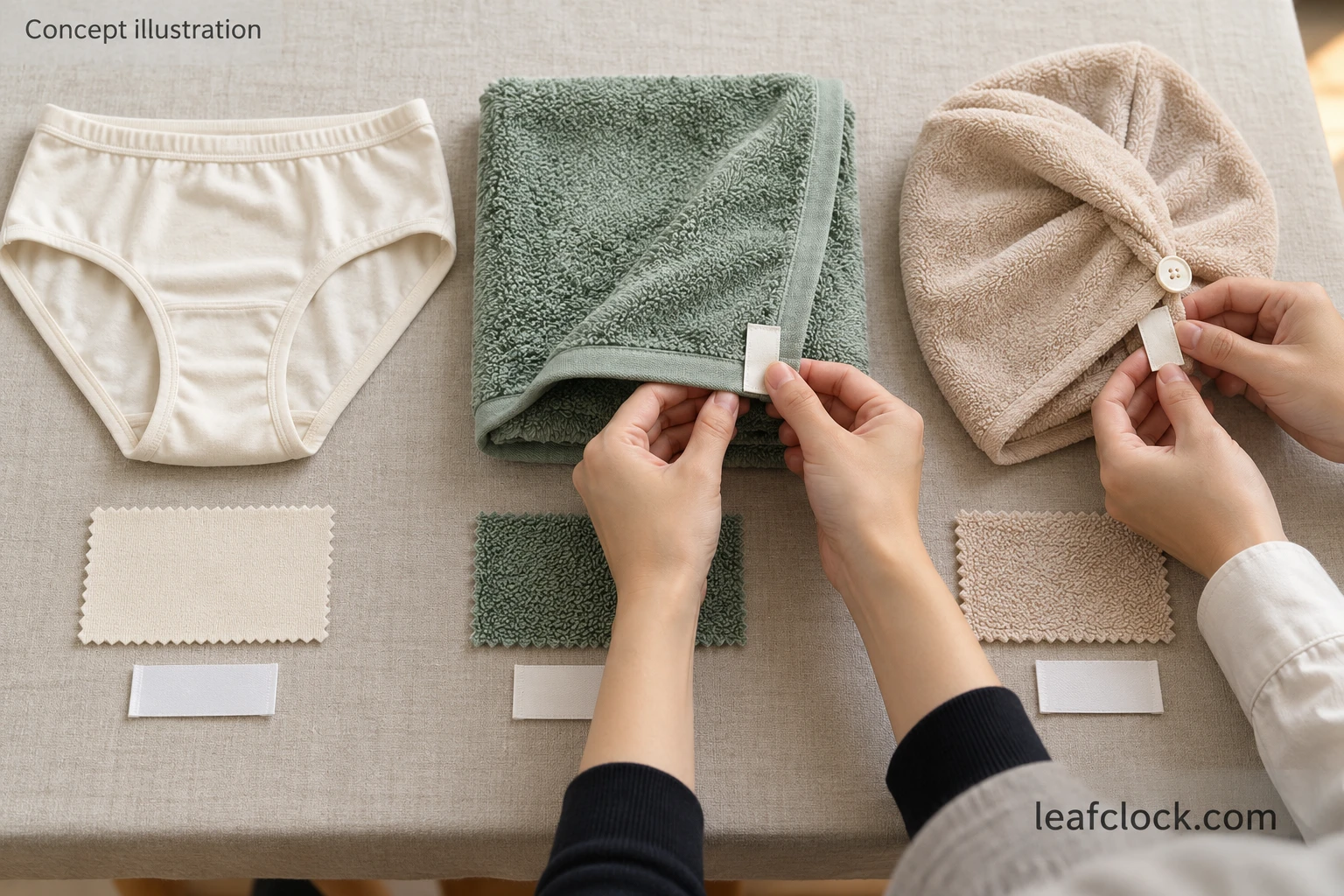
The wider Youkeshu program covers underwear, towels and hair-drying caps. The featured product example is a cream terry towel with a white label sewn into its flat border. Instead of adding an unfamiliar symbol, the lifecycle label places the YOUKESHU wordmark directly above a reference bar.
The instruction is simple: when the wordmark color approaches the color of the bar, it is time to consider replacing the towel. Three choices make the application work as a finished product:
- A familiar brand asset becomes functional. The owner already recognizes the wordmark; now it also provides the changing area to check.
- The comparison stays together. Wordmark and reference bar sit on the same white label, so the reading does not depend on keeping the package or remembering a separate color card.
- The location fits an existing habit. The sewn border label is easy to find when the towel is unfolded, hung or folded after laundering.
Regular material and care information remain part of the product system. The visible cue adds a replacement layer without electronics, an app or a new ownership routine. The towel photograph does not imply that the same sewn construction is used on the program's underwear or hair-drying caps.
What this signals
Youkeshu's production application shows how a lifecycle label can do more than carry technical information: it can make the brand's own visual identity useful throughout ownership. For close-to-body and frequently washed textiles, that creates a direct communication point on the item itself.
For other brands, the lesson is not to copy a wordmark or a towel layout. It is to assess how approved brand artwork can carry an understandable comparison on a real product. Leafclock adapts the configurable cue to each brand's artwork, textile, label construction and care routine.
Next step
Share your wordmark, towel binding and care routine. Check whether the letterforms remain legible as their color approaches the reference bar on the finished towel.